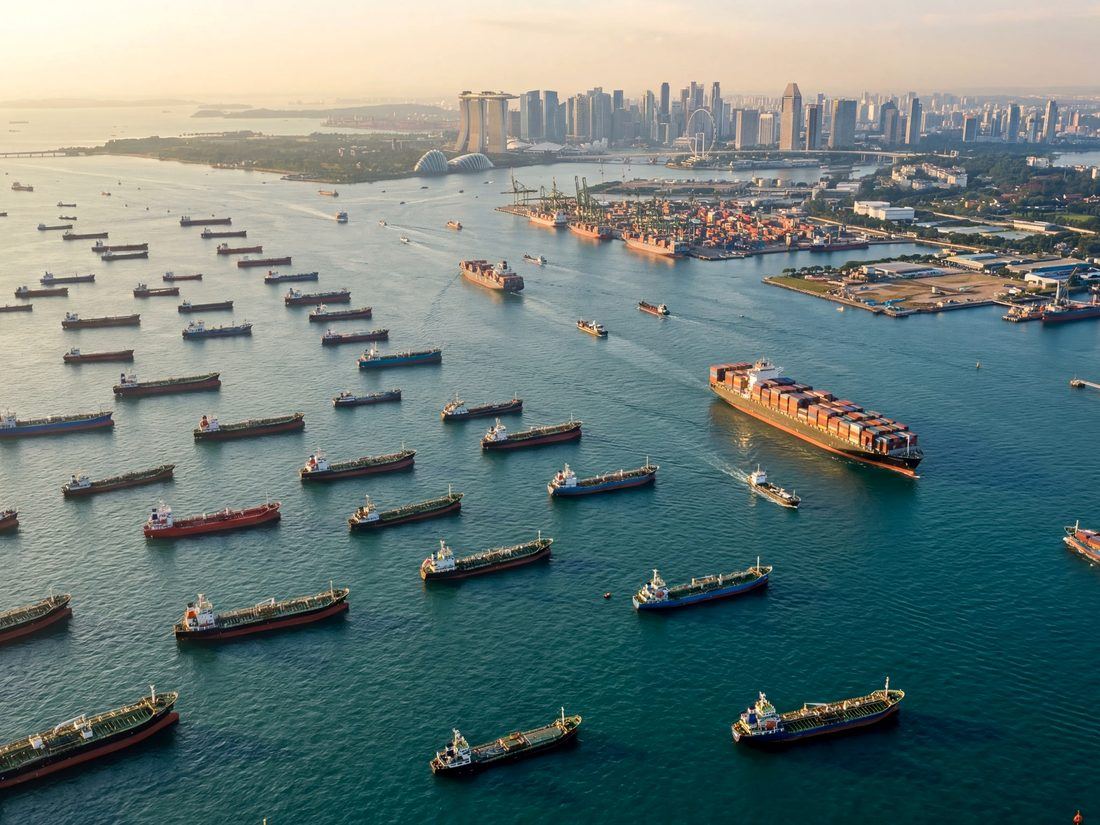
Commodity Trade Finance Fund · Singapore · Luxembourg

Self-liquidating.
Asset-backed.
Proven.

Altrus Capital Partners finances physical commodity trades from producer to industrial end-user — targeting consistent, risk-adjusted returns with structural downside protection.

Request Fund Documents Track Record
USD 715M+
Capital Deployed · Predecessor
911
Transactions Executed
Zero
Credit Losses
70 Days
Average Tenor

A USD 2.5 trillion gap — structural, not cyclical.

  • Basel III and IV have permanently increased the cost of bank trade finance — the trend is not reversing.
  • The 2020 Singapore and Dubai scandals accelerated bank retreat from the mid-market commodity sector.
  • US–China decoupling, Russia–Ukraine, and Red Sea disruptions redirect commodity flows — they do not stop them.
  • New South–South corridors require financing Western banks are poorly positioned to provide.
  • An agile, relationship-driven fund follows these flows and captures the repricing premium.
USD 2.5T
Global Trade Finance Gap · ADB, 2023
USD 293M
Peak Annual Deployment · Predecessor, 2025
15
Active Borrower Relationships · Ready to Deploy
USD 2.8M
Average Bulk Loan Size · Predecessor

The essential funding layer that keeps global trade moving.

Commodity trade finance bridges the gap between producers who need payment now and buyers who need time to process, sell, and collect. It is structural, permanent, and essential — not a niche asset class.

01

What It Is

Commodity trade finance provides short-term working capital to commodity traders — the intermediaries who move physical goods (energy, metals, agricultural products) from producers to industrial end-users across geographies. Every facility is tied to a specific, identified physical transaction: a purchase contract, a sale contract, and a commodity in transit. Capital is advanced, goods are shipped, buyer pays, loan repays. The cycle repeats.

02

Why Traders Need It

Commodity traders perform essential functions — logistics, payment bridging, aggregation, price risk management — that producers and end-users permanently outsource. The structural mismatch at the heart of every trade is this: producers need cash now; buyers need 60–90 days. The trader bridges this gap with their balance sheet, and trade finance funds that balance sheet. This demand does not disappear in recessions, rate cycles, or geopolitical disruptions. It redirects.

03

How Altrus Does It

Altrus finances flows exclusively from producers or processors to industrial end-users — the cleanest, most verifiable structure in the asset class. Every disbursement requires both a purchase contract and a sale contract. The original bill of lading (the document of title to the goods) is held by Altrus until buyer payment is received. A co-signatory collection account means all buyer payments flow directly to Altrus before the borrower can access them. Repayment is structural, not discretionary.

Three structural features that protect investor capital — before any security package is considered.

01

Structural Demand

Commodity traders perform essential intermediary functions — logistics, payment bridging, aggregation — permanently outsourced by producers and end-users. This demand does not disappear in recessions or rate cycles. It redirects. The world always needs to eat, fuel itself, and build things.

02

Payment Compulsion

End-user buyers pay not because the numbers work, but because not paying stops their production line. An industrial processor who defaults on a raw material contract shuts down their factory, damages their brand, and triggers downstream defaults. Operational consequence is more durable than financial calculation.

03

Self-Liquidating Structure

Every Altrus transaction repays automatically from buyer payment upon delivery. The borrower has no opportunity to defer. Either the buyer pays and the loan is repaid, or the buyer does not pay and Altrus acts immediately. No middle ground. No relationship-based forbearance.

Disciplined origination. Structural repayment. No speculation.

  • Self-Liquidating Only Every disbursement requires both a purchase contract and a sale contract in place. Repayment flows automatically from buyer payment — no revolving facilities, no balance sheet lending.
  • Producer to End-User Altrus exclusively finances flows from producers or processors to industrial end-users. Trader-to-trader deals — where circular trading and fictitious flows typically hide — are avoided entirely.
  • Advance Ratio Discipline The advance ratio is the single number integrating all qualitative assessments. A borrower who pushes back hard on limits is a yellow flag — it is a behavioural alignment tool, not just a collateral calculation.

Preferred instruments, in order of security.

I
Letter of Credit — Gold Standard
Issuing bank substitutes its own credit for the buyer's. Repayment depends only on documentary compliance, not buyer willingness.
II
Documents Against Payment
Bank releases original shipping documents to the buyer only upon payment. Altrus retains constructive control of the commodity until that moment.
III
Advance Against Scanned B/L
Buyer pays before Altrus releases the original bill of lading — the document of title. Full document control until payment received.
IV
Open Account — Majors Only
Applied exclusively to major industrial buyers. Formal assignment of receivable. All buyer payments flow into co-signatory collection account.

Capital returns automatically — by design.

Every transaction follows the same structured five-stage lifecycle from origination to repayment.

0

Origination

Borrower presents deal. Credit assessment. Advance ratio calibrated. Facility executed. Collection account opened with Altrus as co-signatory.

1

Disbursement

Altrus disburses to collection account. Borrower deposits equity. Cargo insurance confirmed. Inspection certificate received.

2

Goods & Docs

Goods shipped supplier to buyer. Bill of lading issued to order of Altrus. Vessel tracked via AIS. Shipping documents presented per contract.

3

Payment

LC bank reimburses; DP bank releases on payment; or buyer pays directly into co-signatory collection account.

4

Repayment

Principal and interest applied first. Borrower margin released only after full repayment. Capital recycled to next deployment.

Five layers of structural protection on every transaction.

Control Layer Mechanism
Cargo Insurance ICC A all-risks open cover. Altrus named loss payee at policy level. Seller's Interest Clause mandatory. Confirmed before every disbursement.
Co-Signatory Mandate Collection account in borrower's name. No outgoing payment possible without Altrus's explicit approval — at any time, for any amount.
Assignment of Receivables Formal assignment of sale proceeds to Altrus. Notice served on buyer. Direct legal claim on proceeds independent of borrower.
Personal & Corporate Guarantee All-monies guarantee from directors and corporate parent. Guarantors' personal and corporate assets at risk.
Advance Ratio Borrower equity contribution ensures aligned incentives. Borrower loses own capital before the fund loses anything.

Generated at a predecessor platform by the founding team. Same team. Same borrowers. Same credit framework.

Nov 2020 – Mar 2026 · Through COVID, Russia–Ukraine, Trump tariffs, and Gulf disruptions.

USD 715M+
Total Capital Deployed
911
Transactions
Zero
Credit Losses
94%
Sub-120-Day Loans
Metric Result Note
Total Capital DeployedUSD 715M+Nov 2020 – Mar 2026
Total Transactions911All commodities and structures
Core Sub-120-Day Loans854 (94%)Average tenor 70 days
Borrower Entities15 incl. 4 consolidated groupsMid-market commodity traders
Repayment Record100% — Zero Credit LossesThrough multiple global dislocations
Average Bulk Loan SizeUSD 2.8MExcluding container-shipped borrowers
Peak Annual DeploymentUSD 293M2025 — Record year
Energy / Coal52%
Metals & Scrap20%
Other13%
Refined Petroleum8%
Agriculture7%
9%
Sub-30 days
40%
31–60 days
48%
61–90 days
4%
91–120 days
YearVolume (USD M)TransactionsContext
202034Inception — COVID year
20218574Post-COVID portfolio ramp
2022136101Russia-Ukraine — energy demand surged
202329122Lead originator sabbatical; ops continuity demonstrated
2024109166Full origination restored — strong recovery
2025293370Record year — Trump tariffs + Gulf disruptions
2026 YTD5974To 10 March 2026
TotalUSD 715M+911Zero credit losses across all periods

Where Altrus sits — and why the closed funds failed.

None of the funds that closed failed because commodity trade finance does not work. Each reflects a specific, identifiable governance or credit discipline failure.

Closed Funds — Failure Mode Analysis
Kimura Capital
Closed Dec 2024
Manager misappropriation of funds — a governance failure, not a strategy failure. Altrus's multi-party structure (independent Luxembourg vehicle, MAS-licensed manager, Altrus as separately appointed agent) specifically prevents unilateral manager misappropriation.
Barak Fund Management
Fraud — fabricated transactions and inflated NAV reporting. Transaction-level document verification, third-party inspection, and independent administration are the specific controls that prevent Barak-type failures.
TransAsia Private Capital
Extended a USD 63M facility to a borrower group running phantom trades backed by forged documentation. No document-level verification or physical trade confirmation caught it. The lesson: collection account control and independent inspection are not optional — they are the controls that determine whether fraud is stopped before disbursement or discovered after.
Greensill Capital
Supply chain finance on future receivables that may not have existed — structurally different from Altrus's physical goods transaction financing. The clearest warning on never representing insurance coverage to investors without independently verifying its continuation.

Same net yield. A fraction of the duration. No exposure to the asset class currently under stress.

The broader private credit market is experiencing significant stress. Commodity trade finance is structurally different — not just in degree, but in kind.

Characteristic Broad Private Credit Altrus CTF Fund
Asset duration 3–5 years per loan 30–180 days (avg 70 days)
Repayment source Refinancing dependent — borrower must roll debt at maturity Self-liquidating from buyer payment — no refinancing required
NAV transparency Mark-to-model quarterly — loans carried at par until default Transaction-by-transaction accrual — no par-to-zero problem
Rate sensitivity Floating but spread compression risk as rates fall Floating with structurally sticky spreads — set by transaction risk, not cycles
Redemption risk Gate provisions actively being triggered in 2025–2026 Portfolio duration matches notice period — manageable
Correlation to AI/tech stress Direct — significant exposure to software and AI infrastructure lending None — return drivers are physical trade flows, not financial market cycles
Recovery on default Months-long restructuring of distressed operating business Immediate — goods redirection, collection account control, receivable enforcement
Net yield (current) 8–10% (deteriorating as stress increases) 7–9% (structurally supported by transaction economics)
The consistency of return and capital preservation compounds more powerfully over time than higher headline yields interrupted by losses. A fund that returns 8% consistently over five years outperforms one that returns 14% for four years and loses 30% in year five. We are building a fund for investors who understand this.

Absolute return. No duration. No benchmark. Structurally protected across rate cycles.

Commodity trade finance is not correlated to the factors driving public market returns. It earns from the economics of physical trade — which does not stop in recessions, rate cycles, or geopolitical disruptions.

01
Genuine Absolute Return
Returns are built additively — SOFR plus a credit spread determined by transaction risk, not market sentiment. There is no benchmark risk, no tracking error, and no market beta. The fund targets positive returns in all market conditions because returns are generated by physical trade economics, not financial market movements.
SOFR + 350–550bps
Net spread — structurally sticky
02
No Price-Yield Inverse Relationship
Unlike fixed income, commodity trade finance has no duration and no mark-to-market. When rates rise, gross yield rises automatically as new transactions price at higher base rates. When rates fall, the spread component holds — set by transaction structure risk, not rate cycles. A 5-year investment grade bond purchased at par in 2021 lost 15–20% as rates rose. A trade finance facility repriced upward with every new transaction.
Zero
Duration exposure
03
Structural Decorrelation
Returns are driven by trade flow economics and credit spreads on physical transactions — entirely disconnected from equity market beta, interest rate duration, or credit spread cycles in public markets. There is no daily pricing volatility, no drawdown from market sentiment. This is genuine diversification — structural decorrelation because the return drivers are fundamentally different, not low correlation because assets are infrequently marked.
Zero
Mark-to-market exposure
04
Bank Retreat Creates the Window
Basel III and IV have permanently increased the cost of bank trade finance. The 2020 commodity scandals accelerated specialist team departures. Banks replaced them with generalist corporate bankers focused on the same large names. The mid-market gap is widening, not closing — and repricing upward. An agile, relationship-driven fund captures this structural premium at precisely the moment bank capacity has structurally reduced.
USD 2.5T
Global trade finance gap · ADB 2023
05
Geopolitical Realignment
US–China decoupling, Russia–Ukraine, and Red Sea disruptions do not stop commodity trade — they redirect it. New South–South corridors (Brazil to China, West Africa to Southeast Asia, India to MENA) require financing that Western banks are poorly positioned to provide. Altrus's relationship-driven origination is built exactly for these corridors — following flows that institutional lenders cannot serve at the speed and flexibility required.
15
Active borrower relationships — ready now
06
Immediate Deployment
Unlike a typical new fund requiring 12–18 months to deploy capital while charging management fees on committed AUM, Altrus can be substantially fully deployed within weeks of first close. The 15 existing borrower relationships are active trading operations with current financing needs. KYC and due diligence are current. Documentation is templated from 911 prior transactions. Capital deploys into a functioning origination machine — not a standing start.
1 Month
Target full deployment post first close

SOFR + 350–550bps net. Structurally sticky spreads across rate cycles.

Returns are built additively — SOFR plus a credit spread determined by transaction structure risk, not market sentiment. Spreads do not compress when SOFR falls.

Conservative
5.8%
Net to investor · 85% deployment
Optimistic
8.6%
Net to investor · 95% deployment
SOFR Level Net to Investor (approx.) Expressed As
2.0%5.5% – 7.5%SOFR + 350–550bps
3.0%6.5% – 8.5%SOFR + 350–550bps
3.6% (current)7.1% – 9.1%SOFR + 350–550bps
4.5%8.0% – 10.0%SOFR + 350–550bps
5.0%8.5% – 10.5%SOFR + 350–550bps

Representative deals from the portfolio — across commodities, structures, and corridors.

Every transaction is self-liquidating, backed by physical goods, and structured around identified buyers and sellers. These are illustrative of the team's origination approach.

Used Cooking Oil
Biofuel / Agricultural
USD 2,596,500
Facility Amount · 3,606 mt
60 Days
Tenor
11.17%
Rate p.a.
LC at Sight
Sale Terms
Supplier
Southeast Asian Bioenergy Producer
Vietnam · FOB origin port · Advance payment vs holding certificate
Buyer
US Renewable Diesel Refiner
United States · FOB origin · LC at sight · SCB Singapore
Australian Thermal Coal
Energy — Coal
USD 6,500,000
Facility Amount · 85,000 mt
60 Days
Tenor
12.88%
Rate p.a.
LC at Sight
Sale Terms
Supplier
Australian Coal Producer
Australia · FOB origin port · Advance payment prior to ETA
Buyer
Southeast Asian Industrial End-User
Thailand · CIF destination port · LC at sight · Arab Bank Switzerland
Tin Ingots
Industrial Metals
USD 1,660,489
Facility Amount · 50.18 mt
20 Days
Tenor
11.66%
Rate p.a.
OA 3 Days
Sale Terms
Supplier
Indonesian Metals Producer
Indonesia · FOB origin port · Advance payment vs shipping docs
Buyer
Singapore-Based Commodity Trader
Singapore · CIF Shanghai, China · OA 3 days · CIMB Bank Singapore

A complete suite from no-minimum participation to discretionary managed account.

Each structure is a natural starting point or progression — begin with a transaction, build conviction, formalise the relationship.

Structure
Key Feature
Minimum
Best For
Funded Participation
Transactional
Deal-level visibility. Risk-sharing basis. Altrus retains min 20% of every transaction alongside you.
No minimum
% of deal only
Entry level — build familiarity through direct experience before committing to the fund.
Master Participation Agreement
Framework agreement — efficient revolving deployment. Altrus issues a participation notice per transaction; investor accepts or declines; capital recycles automatically.
No minimum
% of deal only
Regular participants seeking systematic, frictionless deployment across multiple deals.
Undisclosed Loan Sale
Equitable assignment transfers beneficial ownership directly to the investor. Altrus remains undisclosed collection agent — borrower continues dealing with Altrus as normal.
No formal minimum
Investors with direct loan ownership requirements or their own investment SPV infrastructure.
Open-Ended Floating Rate Note
SOFR + net spread. Portfolio diversification across commodities, geographies, and structures. Quarterly reporting on composition, yields, and concentration.
USD 500,000
Standard accredited investors seeking diversified, compounding exposure without reinvestment friction.
Close-Ended Fixed Rate Note
Stated coupon. 12-month defined term. Suited to investors who want yield certainty regardless of SOFR direction.
USD 1,000,000
Investors preferring a defined term and fixed income certainty over floating rate exposure.
IMA — Managed Account
Bespoke mandate. Full deal-level transparency at all times. Customisable parameters within the fund's overall framework. Potential tax efficiency benefits for specific structures.
USD 10–20M
Large family offices and institutional investors requiring granular portfolio visibility and bespoke mandates.

Designed for institutional and qualified investors.

Altrus Capital Partners is structured as a Variable Capital Company (VCC) in Singapore, with a parallel Luxembourg vehicle for European investors.

Fund Structure
VCC (Singapore)
Parallel Luxembourg vehicle available
Target Investors
Qualified / Accredited
Institutional and family office focus
Target Tenor
70 Days Avg
Sub-120-day transactions, 94% of portfolio
Asset Classes
Energy · Metals · Agri
Exchange-traded commodities preferred
Regulatory Advisor
MAS CMS Licensed
Fund Manager regulated by MAS
Tax Exemption
13O Eligible
Singapore VCC structure

The same people who built the track record are deploying this fund.

Richard Liao, CFA
CEO & CIO · Co-Founder · Origination & Risk

Richard is lead originator, structurer, and chief risk officer — the same person who wants to do the deal must live with the consequences. Prior to Altrus, he built a USD 715M+ deployment track record across 911 transactions at SCCF Singapore, a specialist commodity trade finance platform within the Horizon Capital AG ecosystem. Zero credit losses across six years and multiple global dislocations. Richard founded Altrus following AUM constraints at the prior platform and conviction in a dedicated fund structure. He carries the same borrower relationships, the same credit framework, and the same disciplined approach. Richard holds the CFA charter and has deep expertise across energy, metals, agricultural commodities, and refined petroleum.

Jonathan Wong
CSO · Co-Founder · Investor Relations

Jonathan leads investor relations, fund structuring, and operational management — ensuring institutional-grade reporting and investor experience from day one. He operates under the MAS Representative Notification Framework (RNF), enabling him to conduct regulated fund management activities on behalf of the fund's MAS CMS Licensed manager. His focus is building long-term investor relationships founded on transparency: deal-level reporting, vessel tracking updates, repayment confirmations, and quarterly portfolio analytics. Jonathan brings operational discipline and investor communication expertise that complements Richard's origination and credit leadership.

Honest. Not marketed as ESG. Here is why that is the right answer.

Most funds either greenwash or avoid the question. Altrus does neither. Our compliance framework is credit and operationally driven — protecting investors, not performing values.

Our Position
We finance commodities the global economy depends on — including coal.
Altrus CTF Fund is not marketed as an ESG or impact investment product. Commodity trade finance finances the extraction, processing, and movement of physical goods that the global economy depends on. We do not apply blanket exclusions to commodities that global energy security requires. The energy transition is real but measured in decades, not years. During the transition, thermal coal remains essential baseload energy for billions of people, particularly across Asia.
What We Actually Do
Credit risk management — not values performance.
Our compliance framework screens counterparties for legal and financial risk. We follow our banking and insurance partners on corridor and jurisdiction risk. We require genuine trade flows backed by physical goods. We exclude counterparties with fraud implications, regulatory flags, or certification issues — on credit grounds, not ethical grounds. A company caught selling conventional palm oil as UCO faces investigation, certificate revocation, and buyer contract termination. We exclude them because they are worse credits.
Exclusions
Sanctioned entities, war risk zones, fraud-implicated counterparties.
Hard exclusions: sanctioned countries and entities under OFAC, UN, and EU lists; jurisdictions where correspondent banks decline to process payments. Practical exclusions: war risk zones where marine cargo insurers have withdrawn coverage (as of May 2026: Red Sea/Gulf of Aden, Arabian Gulf, Black Sea/Russia-Ukraine waters). When insurers withdraw, Altrus follows immediately — their collective underwriting judgment is our external risk signal.
For Investors
Investors seeking ESG-labelled products should look elsewhere.
Investors seeking honest, disciplined, commercially-grounded commodity trade finance should look here. We will not misrepresent our product to capture ESG capital. Pretending to be something we are not serves no one — not investors whose mandates require genuine ESG compliance, and not investors whose mandates simply require honest disclosure. We choose the latter, and we are explicit about it.
The world always needs to eat, fuel itself, and build things. As long as commodities move, Altrus gets paid. Our job is to finance those flows with rigour, discipline, and full transparency about what we are — and what we are not.

The questions every investor asks before a first meeting.

What is the minimum investment?+
There is no minimum for funded risk participations — investors take a percentage of an individual transaction. For the open-ended floating rate note, the minimum subscription is USD 500,000. For the close-ended fixed rate note, USD 1,000,000. For a discretionary managed account (IMA), USD 10–20M. Participation is the natural entry point for investors building familiarity with the strategy before committing to the fund.
How does repayment actually work?+
Every transaction is self-liquidating. Altrus disburses into a collection account held in the borrower's name with Altrus as co-signatory. The buyer pays into that same account upon delivery. Altrus applies principal and interest first — the borrower's margin is released only after full repayment. The borrower has no opportunity to defer: either the buyer pays and the loan is repaid, or the buyer does not pay and Altrus acts immediately on the security package.
What happens if a buyer defaults?+
Altrus holds the original bill of lading — the document of title — until buyer payment is received. If the buyer does not pay, Altrus retains control of the goods and redirects them to an alternative buyer in the spot market. Fungible commodities (coal, petroleum, metals, agricultural products) have actively traded spot markets. Recovery from goods redirection typically achieves 80–90% of contracted value even in distressed scenarios. This is not a theoretical backstop — it is an immediately executable mechanism.
How is the track record verified?+
The track record was generated at a predecessor commodity trade finance platform (Nov 2020 – Mar 2026) by the Altrus founding team. Full transaction-level detail — 911 transactions, counterparty profiles, facility amounts, tenors, payment mechanisms, and repayment confirmations — is available to qualified investors under NDA. This is documented origination history, not projected performance. The same team, the same borrowers, the same credit framework are now deployed at Altrus.
How do you monitor transactions in transit?+
Altrus tracks every vessel via AIS (Automatic Identification System) data from loading through delivery. Route deviations trigger immediate investigation. AI-assisted document verification cross-references bills of lading, inspection certificates, letters of credit, and invoices for consistency. The collection account co-signatory mandate means no funds can leave the account without Altrus's explicit authorisation at any point during the transaction lifecycle.
Why zero credit losses across 911 transactions?+
The result reflects the consistent application of a transaction-level origination framework that identifies genuine trade flows, verifies physical goods, and structures repayment around buyer payment rather than borrower discretion. The producer-to-end-user philosophy eliminates the most common fraud vectors. Document control through the original bill of lading means Altrus retains constructive possession of the goods until payment is received. The co-signatory collection account prevents diversion of buyer payments. The 2023 sabbatical — 122 transactions processed without interruption during the lead originator's nine-month absence — confirms the framework is systematised, not person-dependent.
How can I request fund documents?+
Contact the team directly at [email protected]. Available materials include the full investor pitch document, participation term sheet, note term sheet, track record detail, and IMA term sheet for larger commitments. Fund legal documentation is available to serious investors under NDA.

Ready to deploy at first close.
15 active borrower relationships.

For qualified investors seeking consistent, risk-adjusted returns from a proven, asset-backed trade finance strategy.

Request Fund Documents

Altrus Capital Partners Pte Ltd · Singapore · [email protected]

MAS CMS Licensed Fund Manager · Singapore