
What commodity traders actually do—and the value they create
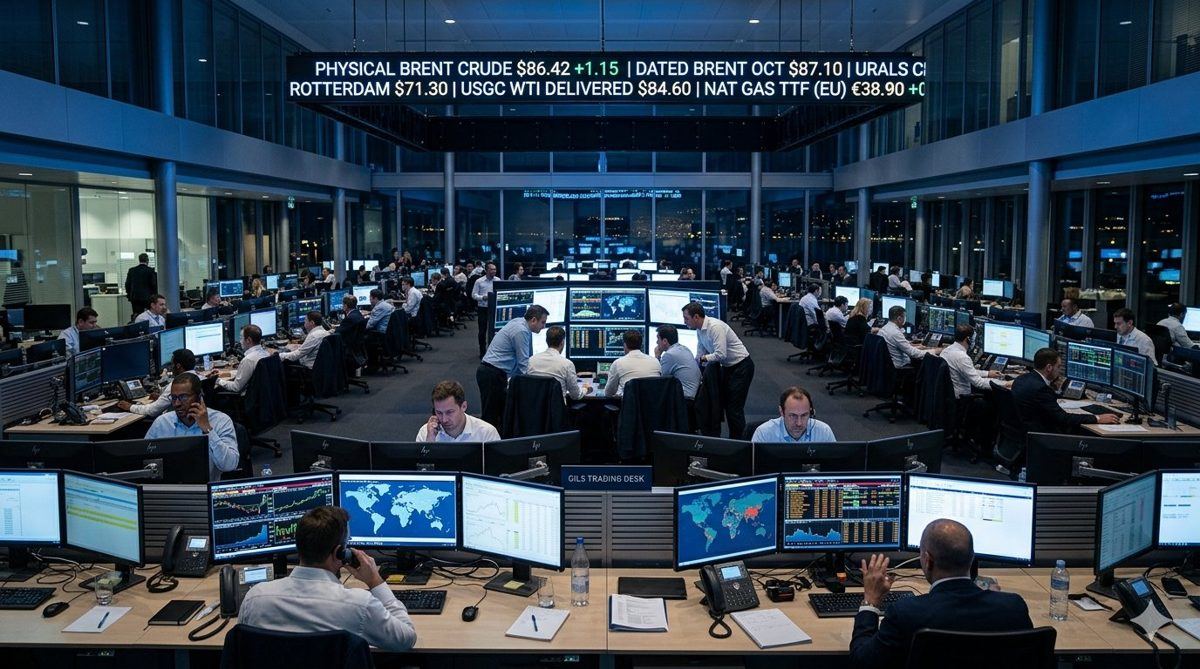
No part of the commodity business is more misunderstood than the trader. In the popular telling, the trader is a middleman who buys low, sells high, contributes nothing and pockets the difference—a parasite on the honest work of miners and farmers. It is a satisfying story. It is also wrong. The firms that move the world's raw materials are not extracting value from a transaction that would have happened anyway; in most cases the transaction would not happen at all without them. Understanding why is the difference between seeing commodity trade as a cost to be minimised and seeing it as the connective tissue of the physical economy.
The clearest framework for what a trader does comes from the academic literature. Professor Craig Pirrong's study of commodity trading firms reduces the entire business to three transformations: a trader changes a commodity in space, in time, and in form. Everything else—the financing, the hedging, the logistics, the analytics—exists to perform one or more of those three transformations profitably and at scale. It is worth taking each in turn, because each is a distinct source of economic value, and together they answer the question the caricature never asks: what is actually being created here?
Transformation in space: the logistics arbitrage
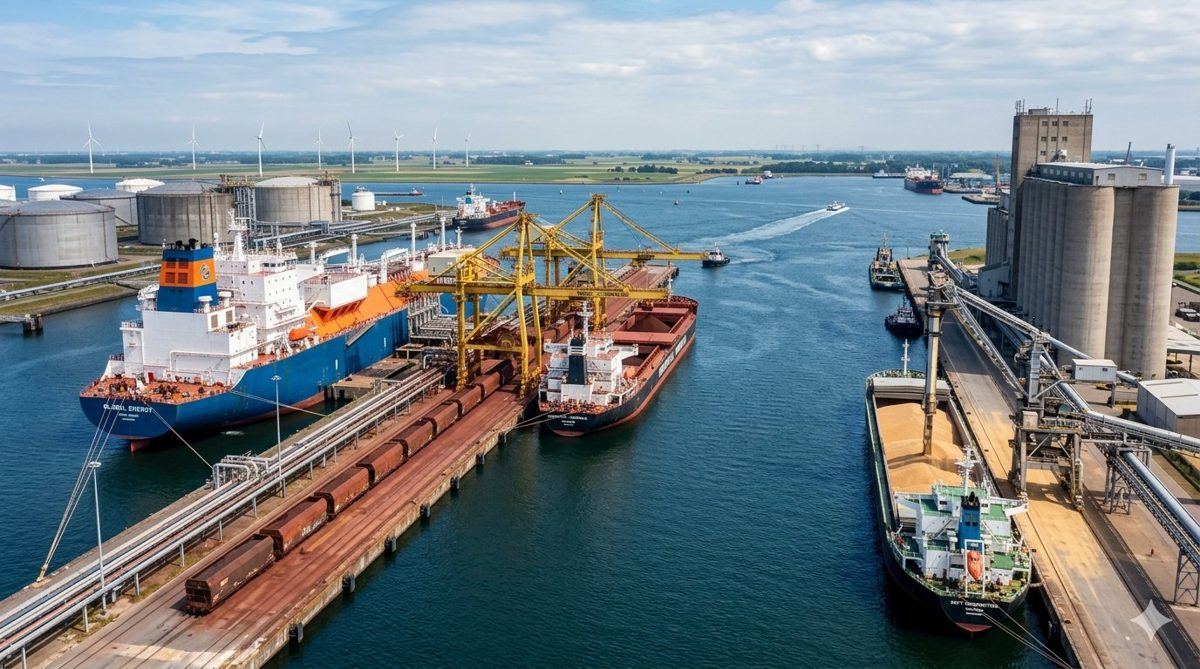
Commodities are produced where geology and climate dictate, and consumed where industry and population concentrate—and the two are rarely the same place. The copper is in Chile and the Congo; the coal and much of the world's nickel ship from Indonesia and Australia; the grain comes off the plains of the Black Sea, the American Midwest and Brazil; the hydrocarbons sit under the Gulf. Demand, meanwhile, lives in the manufacturing economies of Asia, Europe and North America. Moving a commodity from a place where it is abundant and cheap to a place where it is scarce and dear is not a trivial service—it is the creation of value, in the most literal sense. The same tonne of ore is worth more at the mill than at the mine, and the difference is the reward for closing the gap.
The scale of that gap-closing is hard to overstate. Global seaborne trade reached roughly 12.3 billion tonnes in 2023, and the distance those goods travelled—measured in ton-miles—grew faster than the tonnage itself, because disruptions at the Suez and Panama chokepoints forced cargoes onto longer routes. When the Red Sea became unsafe, traffic through Suez fell by about 70 per cent while arrivals around the Cape of Good Hope surged by nearly 90 per cent. That re-routing did not happen on its own. It is precisely what traders do: when a route closes, they find another origin, another vessel, another buyer, and they keep the refineries fed and the shelves stocked. The function is asset-light by design—most trading firms charter freight rather than owning fleets—which is what lets them redirect flows at the speed disruption demands.
Transformation in time: storage and the shape of the curve
Production and consumption are misaligned not only in space but in time. Grain is harvested in a few intense weeks but eaten all year. Gas is produced at a steady rate but burned in winter cold snaps. Someone has to hold the commodity in the interval—to buy when it is abundant, store it, and release it when it is scarce. That is transformation in time, and it is governed by the shape of the forward curve.
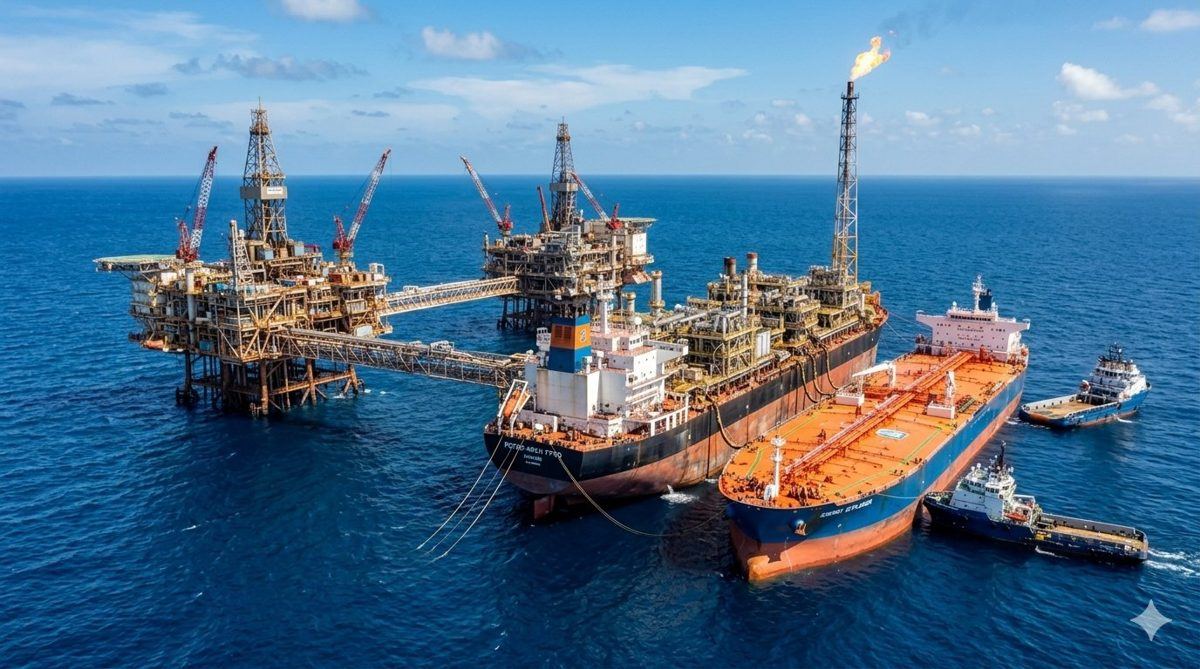
When deferred prices sit above the spot price—a market in contango—a trader can buy today, pay to store, and lock in a forward sale, capturing the spread so long as it exceeds the cost of carry. When the curve is inverted—backwardation—the market is signalling scarcity and paying holders to release inventory now. The mechanism is not abstract. During the demand collapse of 2020, the oil curve fell into such steep contango that traders chartered tankers simply to store crude at sea; at one point in April that year, dozens of the largest crude carriers—around seven per cent of the global fleet—were being used as floating storage. The economics were exact: the trade only worked while the contango spread out-earned the cost of the charter. Far from destabilising prices, this is the behaviour that smooths them—buying into gluts and selling into shortages is, by construction, a stabilising force.
Buying when a commodity is abundant and releasing it when it is scarce is, by construction, a stabilising force—not a destabilising one.
Transformation in form: blending to specification
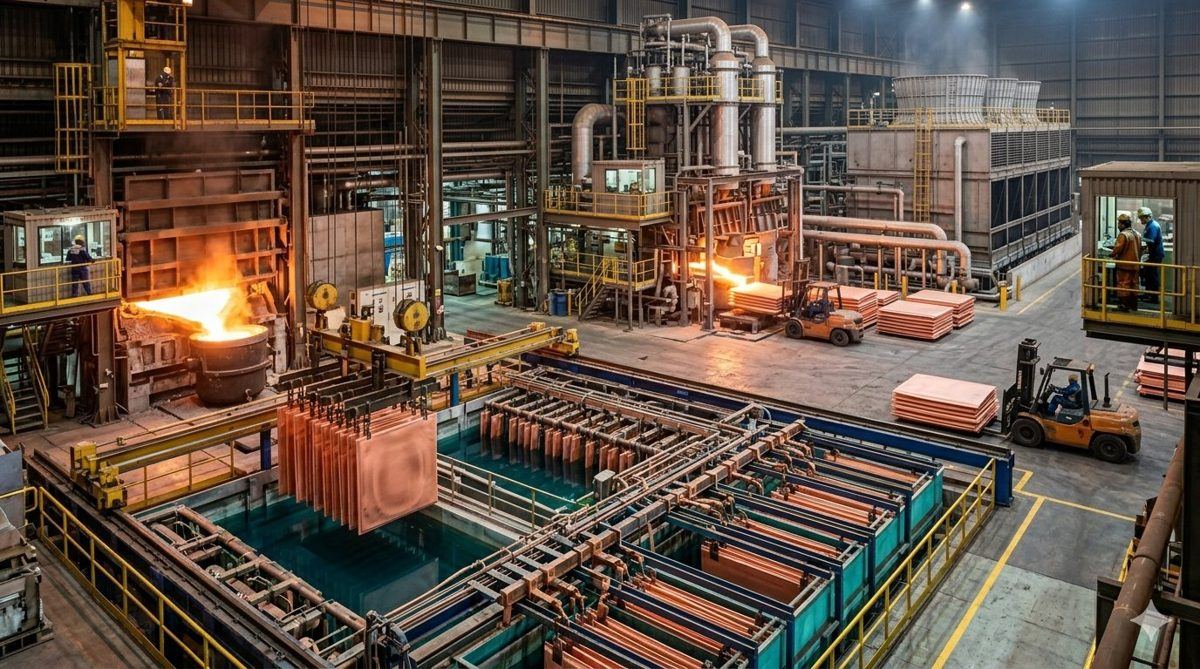
The third transformation is the least visible and the most technical. A buyer does not want crude oil in the abstract; a refinery wants a feedstock within a precise band of density, sulphur and acidity. A power station wants coal at a specified calorific value and ash content. There are more than six hundred commercially traded grades of crude alone, feeding more than eight hundred refineries worldwide, and the trader's job is to bridge the gap between what comes out of the ground and what the buyer's plant can actually process. That means blending—combining heavy with light, sour with sweet, high-ash with low—to hit a contractual specification. The value created is the difference between an unprocessed parcel that no specific buyer wants and a specification-grade cargo that a particular plant will pay a premium for. Benchmarks such as Brent and WTI exist partly to enforce this discipline, with strict delivery rules on sulphur, gravity and metals so that inferior material cannot be quietly blended in undetected.
Price discovery and the law of one price
These three transformations have a by-product that is itself enormously valuable: information. Every time a trader buys in one market and sells in another, the act of doing so transmits a price signal—telling producers where to ship and consumers what to expect. Arbitrage across regions and across the forward curve is what enforces the law of one price, narrows bid–ask spreads, and adds the liquidity that makes a market function. The academic finance literature is clear that arbitrage of this kind improves the informational efficiency of markets and eases price discovery; deeper liquidity means tighter spreads and smaller, less jarring price moves. There is a fair caveat—in genuinely stressed markets, the same depth that normally dampens volatility can let large positions move quickly and briefly amplify it—but the steady-state contribution is unambiguous. Without traders constantly testing where the marginal cargo clears, the price signals on which the entire economy depends would be far noisier and far less useful.
The risk that has to go somewhere
A producer wants a predictable revenue stream; a consumer wants a predictable input cost. Neither wants to be exposed to the violent swings of a flat commodity price. The trader is the party that steps into the middle and absorbs that exposure—and this, more than anything, is what the "speculator" label gets backwards. A well-run trading firm does not bet on the direction of prices. When it buys a physical cargo, it typically sells a matching futures position, neutralising the flat-price risk and retaining only the far more manageable basis risk—the spread between the physical and the paper. As Pirrong puts it, trading firms as a rule hedge their flat-price exposure and earn their living on differentials and spreads, not on the level of prices. The major risks are passed to financial markets through derivatives and insurance; others are diversified away across commodities and transformations; what remains is borne by the firm's own equity. The trader is not a gambler. It is a risk transformer—converting the lumpy, unmanageable exposures of producers and consumers into a diversified, hedged book.
The working capital that makes it all move
None of these transformations can happen without money in the gap. A trader must pay the producer at the load port long before the buyer pays at the discharge port—and the cargo in between has to be financed. This is where trade finance becomes the circulatory system of the whole apparatus. The numbers are striking: by the World Trade Organization's estimate, something like 80 to 90 per cent of world trade relies on trade finance, mostly short-term. Yet the supply of that finance falls chronically short of demand. The Asian Development Bank put the global trade finance gap at a record 2.5 trillion US dollars in 2022—roughly a tenth of all merchandise trade—and it has remained near that level since.
What makes commodity trade finance distinctive is its structure. It is typically short-tenor, tied to a single transaction or a defined cycle, and self-liquidating: the loan is repaid directly out of the sale proceeds of the very goods it financed, and those goods serve as the collateral in the meantime. That structure is why the asset class is so safe when it is underwritten properly. The International Chamber of Commerce's Trade Register, drawing on tens of millions of transactions, has consistently shown default rates below 0.3 per cent, with losses on some instruments measured in single basis points and recoveries far faster than for ordinary lending. The lesson is not that commodity finance is reckless—the data say the opposite—but that the financing is what allows the spatial, temporal and form transformations to occur at all. Take the working capital away and the cargoes stop moving.
Why it matters beyond the trade
The value commodity traders create is not confined to their own margins. By connecting producers in frontier and emerging economies to global markets, they underpin food and energy security and pull smaller producers into supply chains they could not otherwise reach. The development economics are tangible: the Asian Development Bank has estimated that a 10 per cent increase in the availability of trade finance could lift employment by around 1 per cent, and the firms most starved of it are precisely the small and mid-sized exporters that drive job creation. When the energy map was redrawn in 2022, it was traders who rerouted global flows—finding new buyers for displaced barrels and new supply for cut-off consumers—and in doing so kept the lights on across whole regions.
None of this is to romanticise the business. The industry is concentrated, the windfalls of volatile years draw justified scrutiny, and transparency in some segments remains a legitimate concern. But the central point survives all of those caveats. A commodity trader buys something where and when it is worth less, transforms it in space, time or form, and delivers it where and when it is worth more—bearing and managing the risk of the journey, and financing the cargo in the gap. That is not the absence of value creation. It is one of the oldest and most fundamental forms of it.
The views above are the author’s and are provided for general information only. They do not constitute investment, legal or tax advice.
in Share on LinkedIn