
Credit Before Coinage
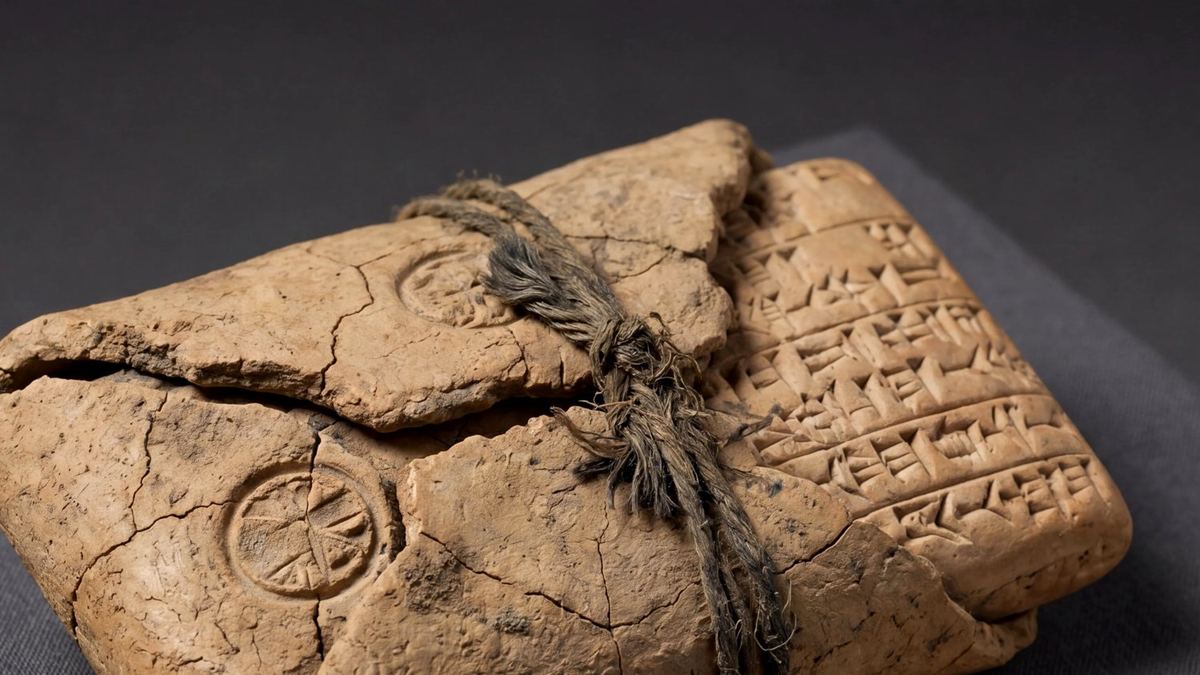
Trade finance is older than money. The first instrument in this series is not an instrument at all — it is a clay tablet, and the discipline it records is the same one a commodity lender practises today.
There is a habit of mind that treats finance as a modern invention — a superstructure built on top of industry, refined in the counting houses of Renaissance Italy and perfected in the City of London. It is a comfortable story, and it is wrong by about three and a half thousand years. Before there were banks, before there were coins, before there was anything we would recognise as a market, there was trade finance. It was practised in the temples of Mesopotamia, and it solved precisely the problems it solves now: bridging the gap in time between the movement of goods and the movement of payment, carrying risk across distance, and substituting trusted record for the dangerous transport of value itself.
This is the first of six essays tracing that single function across four millennia. The argument throughout is one of continuity — that the bottomry loan of ancient Athens, the bill of exchange of medieval Florence, the draft of a nineteenth-century Shanxi bank, and the modern self-liquidating commodity facility are variations on one enduring economic logic. We begin where the written record begins.
The temple as the first bank
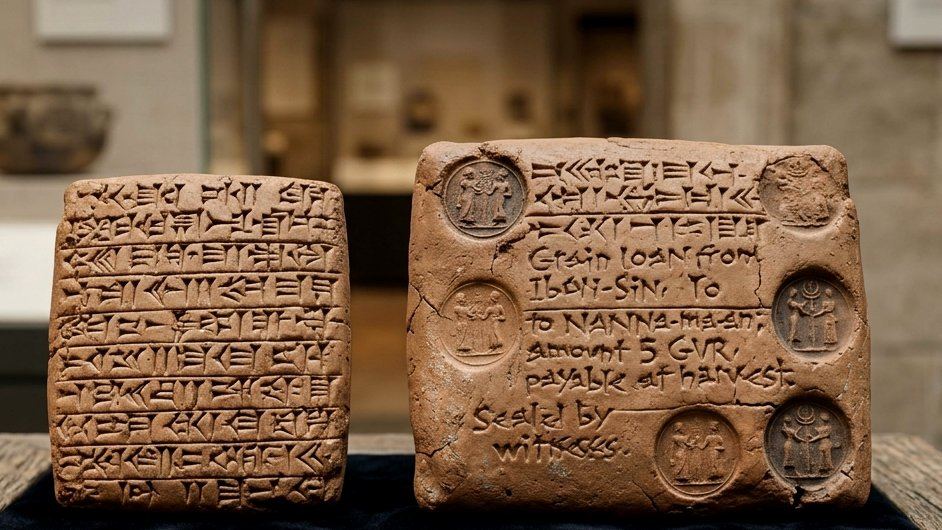
In the city economies of Sumer, Babylon, and Assyria, the temple was the institution with surplus — granaries full of barley, store-rooms of silver, and the social standing to enforce a contract. It lent. One economic historian describes the Mesopotamian sanctuary as functioning "not unlike a national bank," advancing silver and grain to merchants who carried goods over long and dangerous routes, against a share of the profit they brought back. This was finance before coinage: the unit of account was a weight of silver or a measure of grain, and the loan was repaid in kind, with interest.
The interest was not arbitrary. From around 2000 BCE the customary commercial rate in Mesopotamia settled at twenty per cent a year on silver — a figure so stable across centuries that it functioned as a convention rather than a negotiation. Grain, being riskier and more perishable, carried a higher customary rate of thirty-three and a third per cent. The distinction is worth pausing on: the earliest lenders already priced different assets differently according to the risk they carried. That instinct — that the rate must answer to the nature of the underlying good — is the oldest idea in our business, and it remains the most important.
Hammurabi puts it in writing
The Code of Hammurabi, carved around 1750 BCE, is remembered for "an eye for an eye." It is less often remembered as one of the earliest bodies of commercial credit law, and a remarkably sophisticated one. It capped interest at the customary rates and made loans that exceeded them unenforceable — a usury ceiling four thousand years before the term existed. It required that loans be witnessed and recorded, refusing to enforce a debt that could not be evidenced. And it recognised the pledge: a field, a house, or a standing crop could be given as security, and in the antichretic form the yield of the pledged asset offset the interest owed.
Most striking, for anyone who finances physical goods, is the provision for catastrophe. If a storm flooded a debtor's field or drought destroyed his crop, the Code provided that in that year he owed his creditor no grain and no interest. The lender's recovery was understood to be tied to the fate of the goods. This is not charity; it is an accurate description of secured commodity lending. When the cargo is lost, the claim against it is lost with it — and a legal system that pretends otherwise simply produces defaults it cannot collect. Hammurabi's scribes understood that the loan and the goods were one thing.
The same world produced periodic royal mīšarum edicts — "clean slate" proclamations that cancelled consumer debts on a new king's accession. These were debt jubilees, and they tell us something the modern eye can miss: the Mesopotamians distinguished between consumptive debt, taken on by a farmer to survive a bad year, and commercial debt, taken on by a merchant to finance a venture. The jubilees forgave the former and left the latter standing. The trade loan, secured against goods and taken on to make a profit, was treated as a thing that should be honoured. It still should be.
Greece and Rome: the price of the peril
If Mesopotamia gives us secured lending, classical antiquity gives us the explicit pricing of risk — and, in the bottomry loan, an instrument of startling modernity. A foenus nauticum, or maritime loan, advanced money for a sea voyage against the ship and its cargo. If the vessel sank, the debt was extinguished and the lender lost his principal. If it arrived, the lender was repaid in full with a high return. The lender, in other words, was not merely lending money; he was carrying the risk of the voyage, and his interest was the price of that risk.
The numbers were precise. Interest on an Athens–Bosphorus round trip ran at about twenty-two and a half per cent in peacetime and rose toward thirty in time of war, with longer or more dangerous routes priced higher still. Roman law, which capped ordinary interest at twelve per cent — the centesima usura — exempted maritime loans from the ceiling entirely. The jurists explained why in a phrase that ought to hang on the wall of every credit committee: the price is for the peril. Where the lender bears the risk of loss, the return that compensates him is not usury. It is the cost of the risk transferred.
And the Athenians, fourteen centuries before the joint-stock company, already spread that risk. The surviving speeches of the orators show lenders taking small participations across many voyages rather than staking everything on one hull. The instinct for diversification — for refusing to let a single cargo, a single ship, a single counterparty grow large enough to ruin you — is not a refinement of modern portfolio theory. It is as old as maritime lending itself, and the lenders who ignored it did not leave many descendants.
The bottomry loan sits, as a modern scholar observes, somewhere between a loan, a partnership, an insurance contract, and a futures option. That is to say: every major function of trade finance was already present, fused into a single contract, before the birth of Alexander. What followed was not invention so much as the slow separation of those functions into distinct instruments — a process that runs through the whole of this series.
What the clay teaches
Strip away the silver weights and the sea voyages and the discipline that remains is exactly the one a commodity trade financier practises today. Tie the loan to identifiable goods. Price the rate to the risk those goods carry. Secure your recovery against them, and accept honestly that if they are lost, your claim is lost too. Diversify, so that no single loss is fatal. Honour the commercial debt, and write it down where everyone can see it.
None of this required coins, or banks, or computers. It required only goods that had to move, a gap between shipment and payment that someone had to bridge, and the discipline to price the bridging honestly. That is the business. It has not changed. The instruments that carried it across the next four thousand years are the subject of the essays that follow.